

Rebecca Bakos Blumenthal, a legal advisor with Global Rights Compliance, commented on how GRC and the Starvation Mobile Justice Team gathers information and uses OSINT in its work.
Read the original article, here.
Adam Smith is the technology correspondent for the Thomson Reuters Foundation based in London covering the intersection of technology and power. Before joining the Thomson Reuters Foundation in 2022, Adam was a technology reporter for The Independent.
What’s the context?
A non-profit is using open-source intelligence (OSINT) to document starvation war crimes in Ukraine
- Russia using civilian grain to fund war effort
- Satellite imagery and social media key sources of information
- Internet shutdowns, algorithmic bias slow information gathering
From social media videos and photos to commercial data, activists, researchers and journalists are increasingly turning to open-source intelligence to document conflict and gather evidence of possible war crimes.
The OSINT sector has boomed in recent years with the development of tools aiding data analysis, and is now crowded by online sleuths – who often work together as they try to verify information.
Gathering such information from publically available sources, Netherlands-based non-profit Global Rights Compliance (GRC) found that Russia used grain to fund the war effort – purposefully denying food to civilian populations.
Russia allegedly seized control of grain elevators, road and rail infrastructure, posts in occupied territories, as well as from privately owned Ukrainian corporations, which “likely constitutes the war crime of pillage,” GRC wrote in a report published in November.
Context asked legal advisor Rebecca Bakos Blumenthal about how the organisation gathers information and uses OSINT in its work; how it navigates challenges like internet shutdowns and online censorship; and the impact artificial intelligence (AI) could have on OSINT.
How are you using OSINT in your work?
On the ground in Ukraine access is often impractical, due to an area being occupied, so exploiting that digital space is a crucial element.
Our report, ‘Agriculture Weaponised’, which was published in November, details systematic grain extraction, seizure, and transport, from Luhansk and Zaporizhzhia, by Russian forces and affiliated non-military actors.
We looked at satellite imagery and user-generated content on social media platforms, layering those together to verify those instances.
It starts from a basic Google search, but the platforms we’ve used the most are obviously Telegram, but also Twitter (X) and VK (Russia’s version of Facebook).
This can help us find victims or witnesses, as well as helping track alleged perpetrators and monitor statements and whereabouts.
This can also become direct evidence (of war crimes), if it’s images or videos, which can be verified by geolocation or chronolocation.
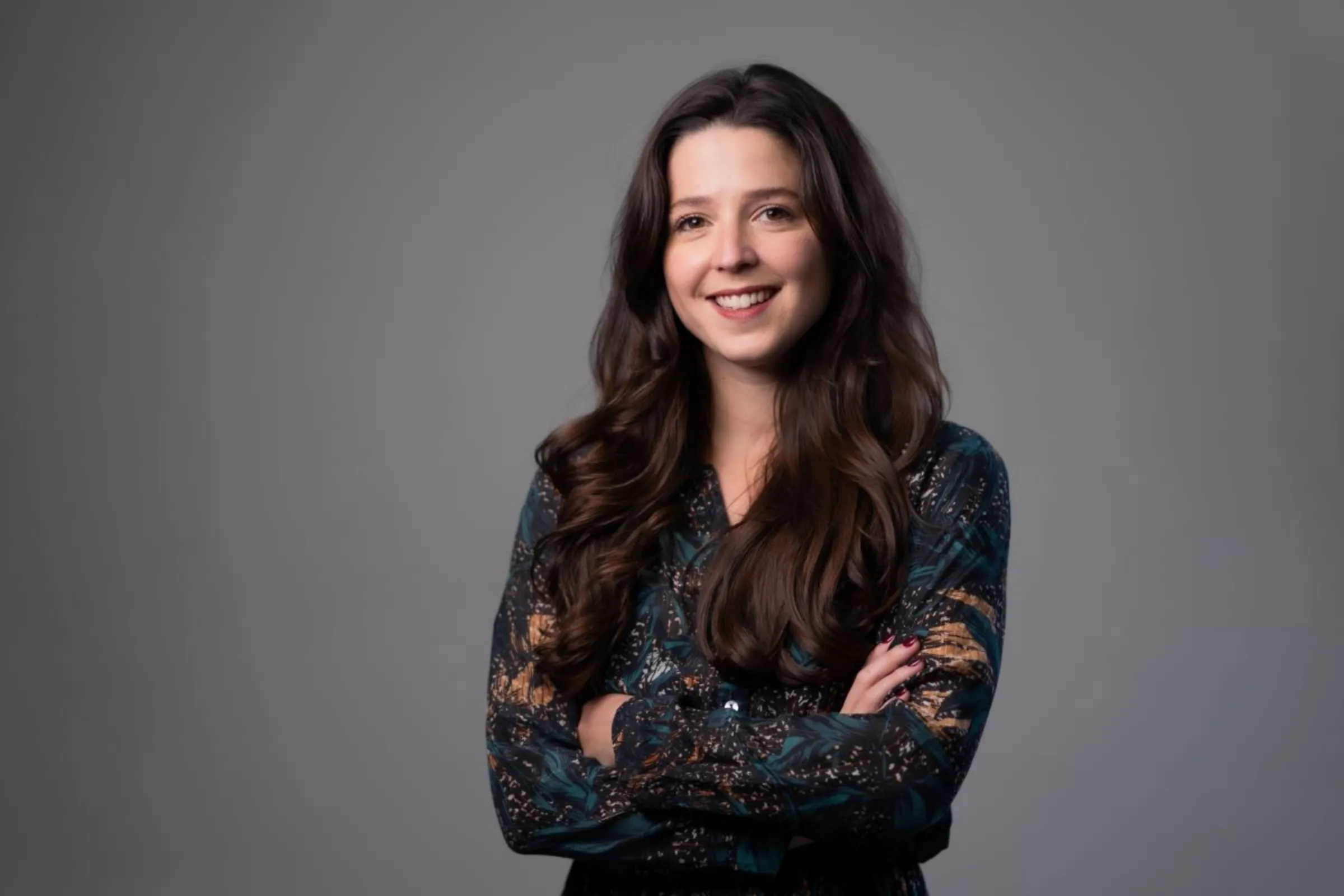
Rebecca Bakos Blumenthal poses for a photo in this undated image. Rebecca Bakos Blumenthal/Handout via Thomson Reuters Foundation
Have you faced any challenges in getting information out of Ukraine?
One of the biggest challenges is ensuring you know how platforms like Telegram and X work, and resisting your own bias. We have amazing Ukrainian investigators and lawyers on our team, and OSINT experts that work with translators.
If you don’t speak the language, you’re going to miss out on loads of content.
Algorithmic bias is also a concern. If you enter a search term, you might get big headlines from newspapers, whereas if you’re researching specific content, you might get more niche results because your algorithms are tailored to it.
That has positive and negative aspects. The positive is you don’t have to spend a day looking for what you’re seeking, because the algorithms identify you as interested in that.
But on the other hand, it might risk excluding certain information.
Tools change in a heartbeat, so it’s important to be adaptable and not rely on a certain tool or platform.
