
Accountability for Mass Starvation:
Testing the Limits of the Law

The Objective
Since 2017, Global Rights Compliance (‘GRC’) has been working with a range of state and non-state partners to advance the prevention and prohibition of as well as accountability for, mass starvation and associated violations. Our collective determination is to make mass starvation morally toxic and drive this objective on multiple planes.
Our approach is based on the understanding that to contribute optimally and in a sustainable manner to the protection of citizens, a focus on prevention alone is insufficient. Action to enhance prohibition and accountability must also be taken and it must form part of an integrated and holistic program of awareness and reform relating to starvation as a violation of international law.
Working with government ministries, multilateral organisations, civil society organisations and academic partners, GRC aims to further its objective by strengthening states’ use of measures to prevent conflict-induced starvation, increasing domestic capacities to document and investigate starvation-related crimes through training and mentoring, and outlining a roadmap for future prosecutions.
From 2018, GRC has worked with the Netherlands Ministry of Foreign Affairs under Phase I Accountability for Mass Starvation: Testing the Limits of the Law’ (2018-2020) and Phase II Accountability for Mass Starvation: UNSC 2417 Implementation Mechanisms (2020-2022).
Phase I
Phase I’s departure point was the landmark UNSC Resolution 2417 (‘UNSC 2417’), which served as a springboard to identify how international law could be harnessed to advance prevention, prohibition and accountability for deliberate starvation. Phase I was carried out by GRC in partnership with The World Peace Foundation, combining with their expertise on conflict and food insecurity to identify how international law may be used to advance the prevention and prohibition of as well as accountability for, mass starvation.
Select Activities in Phase I
Through a combination of in-depth expert legal analysis, case study research and advocacy, Phase I successfully furthered the understanding of conflict and hunger, including the object, purpose and potential of UNSC 2417, across a range of international, national and local stakeholders, including at government (e.g., foreign ministers), UN, and civil society levels, and. Some of the key achievements of Phase I included:
The Rome Statute Amendment
A highlight of GRC’s work was our direct involvement in the historic vote in December 2019 at the 18th Session of the Assembly of State Parties to the International Criminal Court, on the amendment of the Rome Statute tabled by Switzerland, to include the crime of starvation as a war crime in non-international armed conflicts. GRC was integrally involved in the negotiations alongside Switzerland, and provided it with standing legal and strategic advice throughout the course of its worthy initiative.
Starvation Training Manual
Development of a unique tool which enables practitioners to identify, document, monitor, preventively respond to, and seek accountability for, the deliberate use of starvation and associated humanitarian crisis violations. (Available in English and Arabic)
Capacity-building
Delivery of training to UN organisations, journalists, investigators, commissions of inquiry and CSOs from Yemen, South Sudan and Syria regarding the monitoring, investigation and documentation of starvation violations.
Starvation Compendium
Comprising a legal expert report on the crime of starvation and novel research into countries grappling with conflict and hunger, including detailed case studies developed in coordination with country experts on Yemen, Syria and South Sudan.
Phase II
Phase II seeks to build upon the activities successfully implemented in Phase I to ensure that UNSC 2417 continues to be operationalised sustainably. Phase II has a two-fold focus underpinning the proposed activities: first, ensuring that UNSC 2417 and its tenets continue to be sustainably implemented globally and that the Netherlands is able to continue acting as a political champion for UNSC 2417; and second, continuing to offer support as a legal resource centre for the Dutch Ministry of Foreign Affairs across their conflict and hunger agenda.
Select Activities in Phase II
Prevention
Focus on improving the ability to detect and respond to conflict-induced hunger by developing and maintaining digests of relevant sanctions regimes and measures adopted to address starvation crimes; updating the Starvation Jurisprudence Digest to include findings and analysis of starvation issues by numerous panels of experts; serving as advocacy liaison for strategic partners; producing policy papers on the implementation of UNSC 2417; and supporting the UN-appointed High-Level Task Force on Famine.
Prohibition
Focus on ensuring the legal framework for starvation crimes is clear, certain and accessible to ensure that it evolves in a practical and effective manner for the benefit of legal and humanitarian practitioners and policy makers, by undertaking sustained advocacy to promote the ratification of the amendment to the Rome Statute; developing a Rome Statute Digest relating to the domestication of the Starvation amendment; and releasing a Rome Statute Ratification Guidebook to assist CSOs when conducting advocacy with States towards ratification and domestication of the starvation amendment.
Accountability
Focus on developing and ensuring the accessibility of mechanisms to hold those who perpetrate starvation crimes to account by documenting starvation conduct in multiple country contexts, including through a submission to the African Commission on Human and Peoples’ Rights’ ‘Commission of Inquiry into the Tigray region in Ethiopia’; the publication of an unprecedented large-scale documentary and investigative report titled ‘Starvation Makers’, on starvation-related crimes and violations in Yemen, along with our Yemeni partners, Mwatana for Human Rights; and delivery of discreet briefings to states on accountability options for emerging conflict and hunger situations.
Cross-Cutting Expert Steering Committee
For Phase II activities, a steering committee provides expert insight and strategic engagement to the project from a range of disciplines. The expert membership includes Alex de Waal, world-renowned and unparalleled famine expert and Executive Director of the World Peace Foundation; Bridget Conley and Dyan Mazurana from the World Peace Foundation; officials from the World Food Programme and the UN Office for the Coordination of Humanitarian Affairs; academic experts from the Oxford Institute for Ethics, Law and Armed Conflict; Integrated Food Security Phase Classification (IPC) famine experts; and diplomats and humanitarian actors.
The expert steering committee has a rolling technical input function across the starvation project, meeting approximately quarterly to coordinate action and activities across the breadth of the project. Expert steering committee workshops use the Delphi method, according to which experts reply to several rounds of questions with the aim of collecting expert-based input and advice to inform GRC’s project deliverables and approach to date.
Additionally, the expert committee delivers outreach and advocacy activities to regional fora and stakeholders and advocates for the need to address issues around conflict-induced hunger in these fora.
services
GRC offers unparalleled expertise on the crime of starvation and associated violations. We work with states, international organisations and mechanisms, humanitarian actors, civil society organisations, victims and businesses. We offer a range of advisory and consultancy services tailored to prohibit, prevent and seek remedies for starvation, including on-the-ground analysis, advisory services for states on how to implement international law, and the mentoring of civil society to investigate and bring cases.
Our services span three fields:
DISSEMINATION OF THE LAW
- Work with states, UN bodies and multilateral organisations to reform international, regional and domestic legislation with a view to ensuring compliance with international standards, including humanitarian and human rights obligations.
- Work with states, non-governmental organisations (‘NGOs’) and multilateral organisations to provide tailored legal advice on food insecurity, and related international humanitarian and criminal law obligations.
- Assist in creating and implementing an effective remediation system for human rights abuses relating to conflict-induced hunger.
- Engage with states and CSOs to advocate for, and assist in the process of, ratification and domestication of the Rome Statute amendment relating to the war crime of starvation in non-international armed conflicts.
- Provide up-to-date information on the state of the law surrounding the crime of starvation, by distilling starvation-related findings and analysis in dedicated jurisprudence and sanctions digests.
IMPLEMENTATION OF INTERNATIONAL LAW
- Work with humanitarian actors to ensure capacity to the delivery of essential items in conflict affected and weak governance areas in full understanding of the law on starvation.
- Mediate between individuals and affected communities, governments, and businesses to identify potential deprivation of essential resources, including food, shelter, water, and humanitarian assistance and provide solutions to shortages and other supply problems.
- Work with CSOs, lawyers, journalists and humanitarian actors using GRC’s Starvation Training Manual and Basic Investigative Standards Manual on the documentation, and investigation of information, to promote effective accountability and access to justice for starvation crimes.
CAPACITY BUILDING
- Lectures, training, mentoring and/or workshops on starvation crimes, applicable human rights law and prevailing principles.
- Work with CSOs, journalists, investigators, commissions of inquiry and humanitarian actors to ensure a working knowledge of relevant international human rights and humanitarian law concepts to enable them to identify specific violations by state and non-state actors.
- Work with governments to identify effective methods of implementing the states’ international human rights obligations, including obligations to prevent and punish the crime of starvation and human rights violations by non-state actors.
- Work with businesses to allow them to integrate respect for human rights into their everyday work, including respect for natural resources, food and water supplies, housing and other community resources and needs.
TEAM
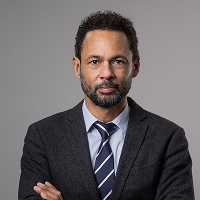
Wayne Jordash KC
President, Head of the Mobile Justice Teams, Ukraine & Accountability & Rule of Law Lead
Wayne Jordash KC is a renowned lawyer specialising in international human rights and humanitarian law. He is also the President of Global Rights Compliance and Deputy Lead of the Atrocity Crimes Advisory Group (ACA), established to aid Ukrainian law enforcement...
In addition, the Project team is regularly assisted by a group of consultants, interns and volunteers on a periodic basis.
partners
- Action Against Hunger
- Bellingcat
- Damaan Humanitarian Organization – Syria and The Hague
- Food for Humanity Foundation – Yemen
- International Development Law Organization (IDLO)
- Mwatana Organization for Human Rights – Yemen
- Peace Track Initiative (PTI) – Yemen
- Andrew Clapham, Commissioner of UN OHCHR Commission on Human Rights in South Sudan (UNCHRSS)
- Save the Children
- Syrians for Truth and Justice – France
- The Centre for Humanitarian Action
- Case Matrix Network (CMN)
- The Women’s Solidarity Network (WSN) – Yemen
- The World Food Programme (WFP)
- The World Peace Foundation (WPF)
- UN OHCHR Group of Eminent Experts for Yemen (GEE)
- UN Special Rapporteur on the Right to Food
- University of Amsterdam (UvA)
- Geneva Center for Security Sector Governance – International Security Sector Advisory Team (DCAF – ISSAT)
- Konrad-Adenauer-Stiftung (KAS) – Germany
- Swiss Federal Department of Foreign Affairs
- The Kingdom of Netherlands Ministry of Foreign Affairs
What our partners say…
The tailored capacity building led by GRC was invaluable in helping participants understand UN Security Council Resolution 2417’s key components and implementation mechanisms, and together identify opportunities for joint advocacy and progress on this vital agenda.
GRC have been a really wonderful partner – in terms of substance, willingness to help out, commitment to high quality work and approach to engaging with Mwatana. GRC’s combination of knowledge, understanding and flexibility, and ability to dialogue, engage, teach and learn, has been really helpful.
– Mwatana for Human Rights, Yemen